

The compression theory
Dreams, creative resistance, and the instinct to make yourself smaller when something threatens to expand you

A few weeks before I arrived in Pisac, I dreamt of a woman compressing herself between plastic crates.
She was fleeing from a man. And when he came to get her, she didn’t run. She didn’t stand her ground. Instead, she wedged herself between two crates and assured me it wouldn’t pierce her skin. She wasn’t trying to harm herself. Only, compress herself, she swore to me.
Hide herself, make herself smaller.
I was the bystander, urging her to stop. That it was morally unsound. That it was a weak thing to make oneself small in the presence of this man.
I woke up disturbed. I don’t usually give much merit to dreams. My sister loves to Google the meaning of hers, finding symbols in spoons for shoes and baseballs for kneecaps. But this one stayed. It felt like a horror scene when I first awoke.
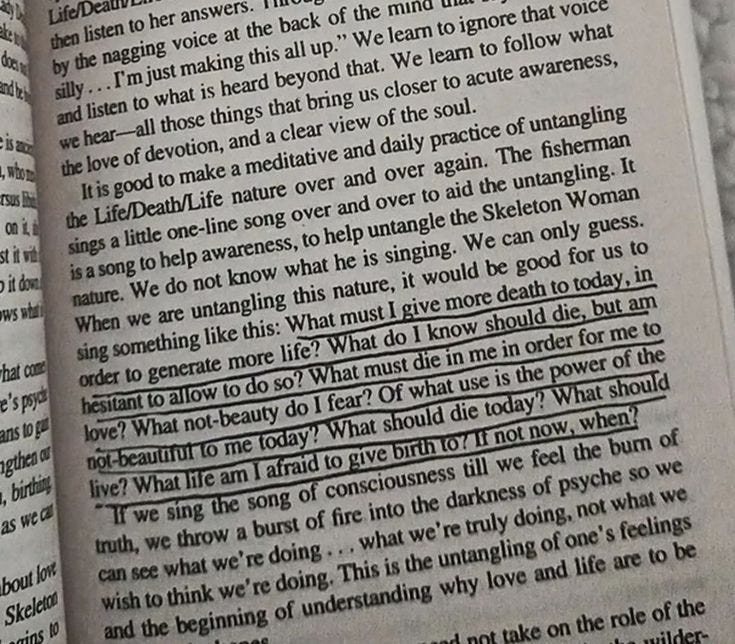
Recently I’d been reading chapters from Women Who Run With the Wolves. And the author, Clarissa, writes that the “Dark Man” dream is experienced by almost every woman, often by age 25. He represents a threat to her creative, wild nature. The compression, the squeezing, the hiding — it indicates that the instinctual, untamed part of you is being suppressed by fear.
The question she poses: was the woman I was urging to stop a part of me?
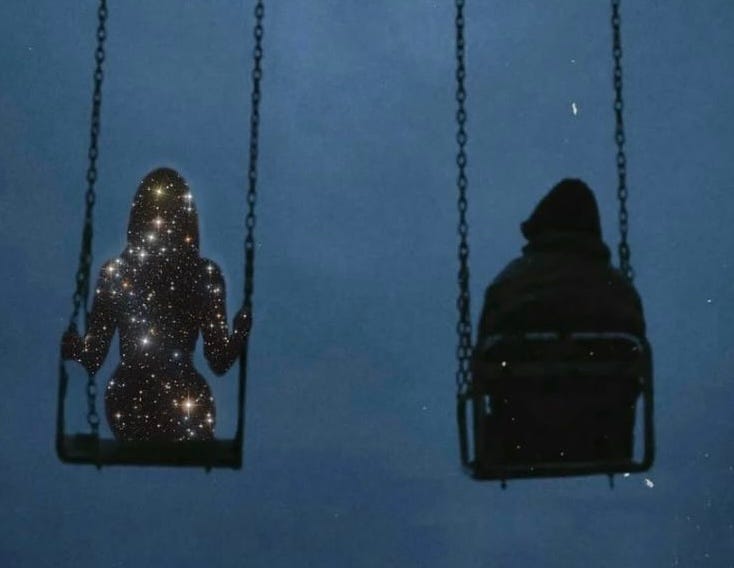
A few weeks ago, while we were in Lima, my boyfriend said something to me that sparked an interesting conversation.
“Sometimes I just want to have nothing.”
We were in our dimly lit bedroom, lying sprawled on top of the covers.
“Nothing? So what about me?”
Admittedly, I, too, had felt this desire. This conviction that my solution is to renounce society for a while. Everything would be better if I could just hide away in nature and write.
But this craving for escape is not a genuine solution. It’s a reaction to discomfort. Restriction. A fear of restriction. Compression.
Having another person to consider is, no matter which way you look at it, restrictive. This is the nature of duality. It is as much expansive as it is restrictive. I have to fight the urge to drown, to toss away a relationship for fear of vulnerability. For fear of the unknown, which I feel intensely lately. What’s next. Where to next. Where to for us? Lovers with different nation residencies.
“You’re a tough one,” he said. “Because with you, comes all of your stuff.”
Ahh, the itch to burn off the weight of life.
When things get uncomfortable. When you don’t know which direction to take… return to the drawing board? That feels better right? Oh yes, it always feels good in the beginning, to start again.
It’s like the feeling of first conceptualising a great, new, fresh idea. You’re ecstatic. Filled with motivation, inspiration, open-ended, promising plans. Mental masturbation. You haven’t even progressed in your grand idea and yet already feel as though you are on your way to great things. Life is good! Life has promise!
And then…
You journey further down the line. Pass dozens of unknown avenues. Suddenly there are decisions to be made. Hardships to manoeuvre. It feels too hard, too complex. Perhaps this wasn’t the right idea after all? It looked good on paper. Too heavy in practice. And so you burn the outlines, the sketches, the drafts and begin again.
I think the desire to renounce all of your baggage, all the life you have accumulated, is actually a desire to renounce the human experience entirely.
“When you die, you will have nothing, don’t worry,” I tell him.
But until then, shouldn’t we use this precious time? Soaking up, drinking up all the richness, the humanness, the glory, the romance, the forbidden fruits and unpaved paths. It is all borrowed, after all.
Here is what I’m calling The Compression Theory.
The dream showed me a woman making herself smaller to survive. My boyfriend’s confession (and my own) showed me the same kind of urge: renounce everything before it has a chance to restrict you.
And for six months this year, I watched myself do it a third way: distract yourself with adventure so you never have to sit still and face the page, my creative Everest
I declared 2026 my creative resurrection year. But then, I hiked Patagonia with my boyfriend. We lived in Lima for three weeks. We completed the Salkantay trek to Machu Picchu… and somewhere over the course of these adventures, I had been distracting myself from the one thing I told myself I would do.
Write the goddamn book.
The thing we wish to do most, we resist most fiercely. I fantasised about being alone, going off into the mountains for an extended period to just write. I felt guilty about it. Pushing it off as an urge to run away from overwhelm, unjustified. But it’s the book. It’s this knowing that I should be doing something and I’m just not doing it.
Travel gives you inspiration in bountiful heaps. But translating inspiration into executed creation requires stillness. Travel is to operate in survival mode. It’s not exactly conducive to creation.
So when my boyfriend flew back to London and suggested I finally retreat into the mountains, I took it. I locked myself in the Sacred Valley. (We’re ten days in!)
They are all the same thing. Compression. The instinct to contract when something threatens to expand you.
Dr. Estés writes that the Dark Man appears when a woman’s creative life is at stake. He is not an external predator so much as an internal gatekeeper. The part of you that would rather you stay small, safe, unexpressed. The part that convinces you the crates won’t pierce your skin. That compressing yourself is survival, not self-harm.
The book I’m here to write scares me. If it didn’t, I would have written it already.
Stephen King talks about a story like it’s a fossil in the earth requiring excavation. Every day you show up and chip away, and with great effort, attempt to keep it in one piece. The book is revealing itself to me slowly. It was always there, I just wasn’t ready to dig.